Netherlands

HIV entry requirements

No restrictions

No HIV-specific entry restriction is reported for ordinary tourist visits.

Must I disclose HIV?
Check your visa and arrival forms

Check the health questions on the forms for your passport and trip before applying. If a health question is unclear, ask the authority handling your application what information is required.

Is an HIV test required?
Check your visa’s medical requirements

Before arranging a test, check the requirements for your exact visa and length of stay. Tourist entry and medical screening for work, study or residence can follow different rules.

Can I bring HIV medication?
Check quantity and paperwork

Before travelling, confirm the permitted quantity of your exact ART and whether you need a prescription, doctor’s letter or import permit. A local clinic appointment does not authorise you to bring medicines across the border.

What is known about enforcement?
Your border outcome cannot be predicted

Confirm the requirements for your passport, visa and purpose of travel. Individual travellers’ experiences cannot establish how often HIV-related rules are enforced in Netherlands.

Residence, work & study

No data

Residence, work and study requirements need further clarification.

Visa and medical screening
Confirm before applying

Residence, work and study requirements need further clarification.

Source ↗
Work and study permits
Check the requirements for your permit

Medical documentation is described for one or more residence, work or study routes; whether HIV affects eligibility is unresolved. This is not evidence of an automatic refusal.

Source ↗
Bringing HIV medication
Check import rules before moving

Confirm the permitted quantity of your ART and any prescription or import-permit requirements before you move. A residence permit does not itself authorise medicine import; arrange local care separately for your ongoing supply.

Medication in Netherlands

Visitor eligibility needs checking

Recognised HIV clinics are listed nationally. Amsterdam’s DC Pharmacy dispenses HIV medication alongside an HIV treatment centre, but its published information does not establish tourist registration or a visitor ART price.

Cost & coverage
DC Klinieken describes Dutch basic-insurance reimbursement with a GP referral, subject to the deductible. A tourist consultation or ART price is not published by this service.[1]
Doctor & prescription
Compliant EU prescriptions can be recognised, with paper copies recommended and Dutch dispensing rules applying. DC’s HIV centre separately requests a GP referral, ID, insurance details and a medication overview; its tourist registration and stock are not confirmed.[1][2][3][4]
Hiv Vereniging — Service PointReferral & supportservicepunt@hivvereniging.nl+31 20 689 2577

HIV information and support. Ask about treatment access for a visit and how to contact a suitable clinic.

DC Pharmacy — AmsterdamDispensing pharmacy

HIV-specialist pharmacy within DC’s treatment centre. Dispensing and registration are documented; tourist eligibility and named ART stock are not published.


HIV care by city in Netherlands

Browse all 5 city guides in Netherlands

Travel experiences

All 18 experiences

Netherlands: visiting and moving with HIV

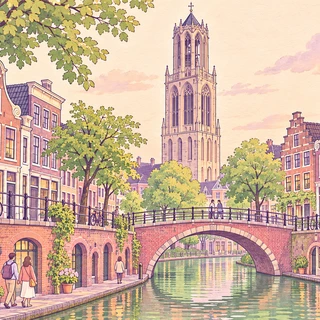
Amsterdam’s narrow gabled houses beside a canal.

The short answer

In the Netherlands, a visitor’s health cover and a resident’s Dutch insurance obligation are different. People who become required to buy Dutch health insurance normally have four months to arrange it, with coverage needed from the start of that obligation. Plan your HIV appointment alongside the insurance paperwork.

Sources: Government of the Netherlands: insurance after moving

A temporary visit: plan more than your entry document

Check the entry rules for your nationality and planned activity. For British visitors, the usual Schengen allowance is 90 days within any 180 across all participating countries, not 90 days in each destination. Taking a local job or staying longer requires the applicable permission.

If eligible, bring an EHIC or GHIC for medically necessary state care during a temporary visit, together with travel insurance for gaps such as private care and repatriation. A planned treatment trip may require advance funding approval. Ask a Dutch clinic how it handles a visitor before booking a consultation around an expected refill.

Sources: GOV.UK: Netherlands entry requirements · GOV.UK: healthcare in Netherlands

Moving: do not mistake four months for four uninsured months

Dutch government guidance says people who come to live or work in the Netherlands generally need Dutch health insurance, even if insured elsewhere. Arrange it as soon as possible and within four months where this obligation applies; cover is required from its start date.

Register with the municipality and ask the insurer which start date and evidence apply. If you enrol too late, the policy is not normally backdated to cover the gap, and you may face medical bills and a fine. Ask about your position early if you work for an employer outside the Netherlands: an exception can depend on social-insurance rules.

Sources: Government of the Netherlands: insurance after moving

Students and international workers: confirm the category

International students do not all need the same insurance. The government explicitly directs students to check the rules for their circumstances, which can depend on nationality and activities alongside the course. Starting paid work can change the answer; do not assume a policy accepted on enrolment remains sufficient.

Ask the university and the relevant insurer or social-insurance authority which scheme covers ongoing HIV treatment, monitoring and medication. Request an answer about the actual regimen and planned care. Insurance suitable only for emergencies or with a pre-existing-condition exclusion is not a reliable continuing-treatment plan.

Sources: Government of the Netherlands: insurance after moving · GOV.UK: healthcare in Netherlands

Bringing medicine through a Dutch airport or border

NetherlandsWorldwide advises travelling with medicines in their original packaging and carrying evidence of personal use, such as a medication list from your pharmacy. Keep medicines in hand luggage and check airline rules for liquids or injection equipment.

Some medicines require a certificate under the Dutch Opium Act. Check the active ingredients of all your prescriptions, including sleep, pain or ADHD medication taken alongside ART. A routine medication passport does not replace a required certificate. The issuing and legalisation process depends on the country you travel from, and the document may also be needed during airport transit.

Sources: NetherlandsWorldwide: taking medication into the Netherlands

Confirm the clinician, pharmacy and payment route

Before a move, ask a receiving HIV service whether it can accept the transfer and what referral or insurance information it needs. Share the generic drug combination and strength, not just the brand name. Request a first appointment and an explanation of how the subsequent prescription will be dispensed.

Carry the clinical information your current team recommends, including the treatment history needed to avoid an inappropriate substitution. Keep the date your current supply ends visible in your plan. Neither an insurance policy number nor a consultation booking confirms that a specific pharmacy has the medicine ready.

  • Confirm whether Dutch insurance is compulsory in your situation.
  • Resolve coverage immediately if you start a job during study.
  • Arrange the first HIV appointment and dispensing location before arrival.

Sources: GOV.UK: healthcare in Netherlands · Government of the Netherlands: insurance after moving · NetherlandsWorldwide: taking medication into the Netherlands

Common questions

Can I wait four months after moving before thinking about insurance?

No. Arrange it promptly. The four-month deadline is not a promise of free treatment while uninsured, and late enrolment can leave an uncovered period.

Sources: Government of the Netherlands: insurance after moving

Do all medicines need an official certificate for the Netherlands?

No. Certificates are required for specified controlled medicines. For other medicines, original packaging and evidence of personal use help identify the supply; check the ingredients of every product.

Sources: NetherlandsWorldwide: taking medication into the Netherlands

Help make travel easier for people living with HIV.

Everyone deserves to explore the world with confidence. Your support helps us verify travel rules, find local HIV care, and keep this information free for everyone.

Additional Resources

Notes

Travel sources checked 2026-10-11. Updated by Positive Destinations: Oct 2024.

Sources & notes

  1. Positive Destinations · Netherlands ↗

    Specialist secondary source · Oct 2024

  2. hiv-monitoring.nl ↗

    Medication contacts checked 2026-10-22.

  3. Hiv Vereniging — Service Point ↗

    Medication contacts checked 2026-10-22.

  4. dcklinieken.nl ↗

    Medication contacts checked 2026-10-22.

  5. dcklinieken.nl ↗

    Medication contacts checked 2026-10-22.

  6. DC Pharmacy — Amsterdam ↗

    Medication contacts checked 2026-10-22.

  7. europa.eu ↗

    Medication contacts checked 2026-10-22.

  8. rijksoverheid.nl ↗

    Medication contacts checked 2026-10-22.

  9. GOV.UK: Netherlands entry requirements ↗

    Official travel advice; visa-free examples are for British passports, not every nationality. Read 24 October 2026. Sources checked 2026-10-24.

  10. GOV.UK: healthcare in Netherlands ↗

    Official guidance on temporary healthcare access, insurance and medication. Read 24 October 2026. Sources checked 2026-10-24.

  11. Government of the Netherlands: insurance after moving ↗

    Primary four-month deadline, coverage start, late registration, international-student and foreign-employer exceptions. Read 24 October 2026. Sources checked 2026-10-24.

  12. NetherlandsWorldwide: taking medication into the Netherlands ↗

    Primary government guidance on personal-use proof, controlled-medicine certificates and airport transit. Read 24 October 2026. Sources checked 2026-10-24.

Research by the hiv.travel team. This is a practical research guide, not an individual medical assessment or an immigration decision. Requirements and availability can change.

Tourism information does not automatically cover transit or extended stays. Visa and medication rules may vary by passport and route.

Medical documentation is described for one or more residence, work or study routes; whether HIV affects eligibility is unresolved. This is not evidence of an automatic refusal.

Residence, work and study permits may have different requirements. Visa and medication rules may vary by passport and route.

Research and editing: hiv.travel. The dates above record source checks, not medical review or the date a law changed. How we check

Underlying specialist sources have not all been independently rechecked. Missing information does not confirm permission. Personal experiences describe individual outcomes.

Suggest a correction →
Contribute

Cookie settings

Optional cookies help us understand how people use the site so we can improve it. You can turn them off or allow statistics only. Session recordings are currently disabled. You can change your choice anytime. Privacy details

Current choice: off.