DestinationsAmericas

Chile

HIV entry requirements

No restrictions

No HIV-specific entry restriction is reported for ordinary tourist visits.

Must I disclose HIV?
Check your visa and arrival forms

Check the health questions on the forms for your passport and trip before applying. If a health question is unclear, ask the authority handling your application what information is required.

Is an HIV test required?
Check your visa’s medical requirements

Before arranging a test, check the requirements for your exact visa and length of stay. Tourist entry and medical screening for work, study or residence can follow different rules.

Can I bring HIV medication?
Check quantity and paperwork

Before travelling, confirm the permitted quantity of your exact ART and whether you need a prescription, doctor’s letter or import permit. A local clinic appointment does not authorise you to bring medicines across the border.

What is known about enforcement?
Your border outcome cannot be predicted

Confirm the requirements for your passport, visa and purpose of travel. Individual travellers’ experiences cannot establish how often HIV-related rules are enforced in Chile.

Residence, work & study

No data

Residence, work and study requirements need further clarification.

Visa and medical screening
Confirm before applying

Residence, work and study requirements need further clarification.

Source ↗
Work and study permits
Check the requirements for your permit

Medical documentation is described for one or more residence, work or study routes; whether HIV affects eligibility is unresolved. This is not evidence of an automatic refusal.

Source ↗
Bringing HIV medication
Check import rules before moving

Confirm the permitted quantity of your ART and any prescription or import-permit requirements before you move. A residence permit does not itself authorise medicine import; arrange local care separately for your ongoing supply.

Medication in Chile

Visitor eligibility needs checking

AHF supports migrants and treatment enrolment. Its migrant guidance does not specifically establish tourist refill eligibility.[1][2][3]

Cost & coverage
AHF describes full covered HIV care through FONASA/GES after programme enrolment. Private ISAPRE patients have a provider-set copayment; no tourist price is published.[1][2][3]
Doctor & prescription
You need admission to the local treatment programme and clinical or pharmacy appointments. Confirm what you must bring; direct dispensing on an overseas prescription is not established.[1][2][3]
Available treatments
Treatment is provided through the receiving HIV service. These access pages do not list ART regimens or live stock.[1][2][3]
AHF Chile — treatment access supportReferral & support+56 9 3381 8670

For Santiago, contact Paseo Estado 360, fourth floor. Contacts are also available for Antofagasta and Concepción.

HIV care by city in Chile

Browse all 5 city guides in Chile

Travel experiences

All 6 experiences

Chile: visiting and moving with HIV

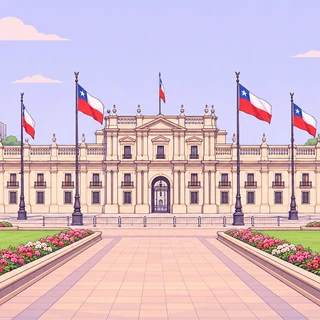
Original pastel illustration inspired by Chile: a civic courtyard below a long Andean mountain skyline.

The short answer

No HIV-specific entry restriction is reported for Chile. The practical work is matching your immigration route, medicine documents and healthcare cover: GES supports HIV care through designated networks, while a visitor must confirm eligibility before relying on a refill.

Sources: US Department of State: Chile entry requirements · ISP: bringing medicines in luggage · Superintendencia de Salud: HIV GES care and costs

Holiday & entry

Chile has no known HIV-specific entry restriction for visitors or foreign residents according to the US Department of State. Having HIV does not replace the ordinary passport and visa checks. Use the consular nationality list linked by SERMIG to see whether you need advance permission.

Short visits normally use Permanencia Transitoria: up to 90 days, with a possible single extension of up to another 90 days. The actual authorised period and your passport validity control. Keep the Tarjeta Única Migratoria (TUM) given at entry; it records your permission.

Sources: US Department of State: Chile entry requirements · SERMIG: short visits and extensions

Long stays & renewals

Temporary residence has distinct categories for work, study, family and other purposes. It generally lasts up to two years, with different rules for seasonal workers. The general renewal window is between 90 and 10 days before expiry; diary the date rather than waiting until your medicines or permit run out.

Do not assume you can arrive as a tourist and convert to residence inside Chile. SERMIG lists limited exceptions. Arrange the appropriate application from abroad when required, alongside a separate plan for health enrolment and the first specialist appointment.

Sources: SERMIG: temporary residence and renewals · SERMIG: short visits and extensions

Work & study

The paid-activity residence route normally starts with an application from abroad. A signed-contract route and a formal-job-offer route have different evidence and deadlines. Check the employer documents before making a move; a tourist permission is not general permission to work.

Student applicants need enrolment at a recognised establishment and evidence of financial support. Holders of student temporary residence may undertake lawful paid activities for up to 30 hours per week without a further work authorisation. Renewal requires evidence that the studies and financial support continue.

For a job or course, ask when your healthcare cover begins, how to register with the local primary-care service and which HIV unit will receive the referral. Immigration approval alone does not arrange any of those appointments.

Sources: SERMIG: residence for paid activities · SERMIG: student residence · Superintendencia de Salud: HIV GES care and costs · ChileAtiende: Fonasa enrolment

Tests & disclosure

Chile’s HIV law protects confidentiality and voluntary testing, with specified exceptions. It prohibits using an HIV test as a condition for ordinary hiring, continued employment or promotion, and protects admission and continuation in education. Certain uniformed-service entry rules are treated separately; do not apply the ordinary employment rule to every specialist career.

The work and student checklists do not list a routine HIV-negative certificate. If someone requests one, ask for the exact requirement and recipient. Share clinical records with your treating team through its agreed channel; avoid attaching a full medical history to unrelated administrative enquiries.

Sources: Chile Law 19.779: HIV testing and nondiscrimination · SERMIG: residence for paid activities · SERMIG: student residence

Airports & borders

Keep your medicines and prescription together and accessible. LATAM accepts a digital or paper prescription confirming their use and states that it does not provide a cold-chain service. If a product needs refrigeration, discuss a suitable container and handling with your pharmacist and airline before travel.

For a connection, check whether you remain in transit or must enter another country to collect baggage. Chile’s medicine guidance does not cover the next border. If continuing by land to Argentina, Peru or Bolivia, check that destination’s import rules and carry enough documentation for both sides.

Sources: LATAM: travelling with medicines · ISP: bringing medicines in luggage · SERMIG: short visits and extensions

Medication

The ISP asks for a doctor-signed prescription or certificate showing the daily dose and treatment duration, dated within the previous six months. A Spanish translation is recommended where the original is in another language; generic ingredient names make the regimen easier to identify.

Carry medicines in their original packaging and a quantity consistent with the prescription. The ISP’s June 2025 explanation refers to up to six months of prescribed treatment, but this should not be treated as blanket permission for every medicine or an unusually large supply. Confirm product-specific questions with ISP.

For a refill, ask the Chilean HIV service to review your ingredient names, strengths, treatment history and recent monitoring. Confirm whether the formulation is available and how a local prescription is issued. Do not switch treatment simply because a familiar brand name is unavailable.

Sources: ISP: bringing medicines in luggage · Superintendencia de Salud: HIV GES care and costs

Care & costs

HIV care is covered through the GES system for eligible beneficiaries. The official pathway distinguishes Fonasa’s public network from an Isapre’s designated network. In that pathway, the published copayment is 0% for Fonasa groups A–D and 20% for Isapres. These are coverage rules, not an unconditional price for an uninsured visitor.

ChileAtiende lists employment-based and low-income Fonasa routes, including foreign people without regular documents. People without income must establish that circumstance. Ask Fonasa or the local health centre which documents and category apply to you and when cover starts; do not assume a short visit activates enrolment.

Once registered, ask the local CESFAM or the insurer for referral to the appropriate HIV service. GES treatment and follow-up take place in its specified hospital or specialist network. If paying privately, request separate quotes for consultation, tests and ART, and confirm stock before travelling for an appointment.

For confidential help navigating the next step, FONOSIDA is available at 800 378 800, free within Chile, 24 hours a day. It offers information and counselling; it is not a pharmacy or a promise of a same-day prescription.

  • Check your visa category and the TUM or residence expiry date.
  • Bring a recent signed prescription, original packaging and your treatment summary.
  • Confirm Fonasa, Isapre or self-pay access before relying on a local refill.
  • Agree on the receiving HIV service, appointment and dispensing date.

Sources: Superintendencia de Salud: HIV GES care and costs · ChileAtiende: Fonasa enrolment · MINSAL: FONOSIDA counselling

Common questions

Can I visit Chile with HIV?

No known HIV-specific entry restriction is reported. Check your nationality’s ordinary visa rules and prepare the documents for the medicine you carry.

Sources: US Department of State: Chile entry requirements · SERMIG: short visits and extensions · ISP: bringing medicines in luggage

Is HIV treatment free for every visitor?

No universal visitor entitlement was established. Fonasa’s designated GES pathway has zero copayment for enrolled beneficiaries; private insurance and uninsured access need separate confirmation.

Sources: Superintendencia de Salud: HIV GES care and costs · ChileAtiende: Fonasa enrolment

Can I work during a student stay?

Holders of Chile’s student temporary-residence category may undertake lawful paid work up to 30 hours weekly. A tourist permission follows different rules.

Sources: SERMIG: student residence · SERMIG: short visits and extensions

Help make travel easier for people living with HIV.

Everyone deserves to explore the world with confidence. Your support helps us verify travel rules, find local HIV care, and keep this information free for everyone.

Additional Resources

Notes

Travel sources checked 2026-10-11. Updated by Positive Destinations: Sep 2024.

Sources & notes

  1. Positive Destinations · Chile ↗

    Specialist secondary source · Sep 2024

  2. aidshealth.org ↗

    Medication contacts checked 2026-10-22.

  3. AHF Chile — treatment access support ↗

    Medication contacts checked 2026-10-22.

  4. ahfchile.cl ↗

    Medication contacts checked 2026-10-22.

  5. US Department of State: Chile entry requirements ↗

    HIV entry section read 28 October 2026. No known restrictions for visitors or foreign residents; ordinary passport rules still apply. Sources checked 2026-10-28.

  6. SERMIG: short visits and extensions ↗

    Visitor duration, nationality exceptions, TUM, work restrictions and in-country residence exceptions read 28 October 2026. Page updated 14 October 2025. Sources checked 2026-10-28.

  7. SERMIG: temporary residence and renewals ↗

    General requirements and current renewal FAQ read 28 October 2026. Up to two years except seasonal category; extension window 90 to 10 days before expiry. Sources checked 2026-10-28.

  8. SERMIG: residence for paid activities ↗

    Eligibility, application location and employment-document sections read 28 October 2026. Contract and formal-offer routes differ; no detailed employment-law advice inferred. Sources checked 2026-10-28.

  9. SERMIG: student residence ↗

    Main application, documents, paid-work and renewal sections read 28 October 2026; updated 18 December 2025. Up to 30 hours paid work weekly applies to holders of this category. Sources checked 2026-10-28.

  10. Chile Law 19.779: HIV testing and nondiscrimination ↗

    Current consolidated articles 5 and 7 read 28 October 2026, including specific statutory exceptions. Employment and education protections are not immigration permission or an insurance entitlement. Sources checked 2026-10-28.

  11. ISP: bringing medicines in luggage ↗

    Full indexed text of the 5 June 2025 official article read 28 October 2026. Direct page retrieval returned 502. Prescription dated within six months; amount consistent with treatment. Its six-month treatment wording is not presented as universal approval for every product. Sources checked 2026-10-28.

  12. LATAM: travelling with medicines ↗

    Complete relevant official answer read 28 October 2026. Digital or paper prescription; no airline cold-chain service. Applies to LATAM, not every carrier. Sources checked 2026-10-28.

  13. ChileAtiende: Fonasa enrolment ↗

    Indexed official February 2026 description, eligibility and application text read 28 October 2026. Direct HTML/PDF attempts blocked 403/502. Includes undocumented foreigners, income assessment and enrolment; not automatic tourist eligibility. Sources checked 2026-10-28.

  14. Superintendencia de Salud: HIV GES care and costs ↗

    All relevant eligibility, network, benefits, waiting-time and copayment sections read 28 October 2026. Fonasa 0%, Isapre 20% in designated GES network; illustrative tariff not represented as a universal medication price. Sources checked 2026-10-28.

  15. MINSAL: FONOSIDA counselling ↗

    Complete service description read 28 October 2026. 24-hour confidential national counselling, 800 378 800, free within Chile. Orientation, not a dispensing clinic. Sources checked 2026-10-28.

Research by the hiv.travel team. This is a practical research guide, not an individual medical assessment or an immigration decision. Requirements and availability can change.

Tourism information does not automatically cover transit or extended stays. Visa and medication rules may vary by passport and route.

Medical documentation is described for one or more residence, work or study routes; whether HIV affects eligibility is unresolved. This is not evidence of an automatic refusal.

Residence, work and study permits may have different requirements. Visa and medication rules may vary by passport and route.

Research and editing: hiv.travel. The dates above record source checks, not medical review or the date a law changed. How we check

Underlying specialist sources have not all been independently rechecked. Missing information does not confirm permission. Personal experiences describe individual outcomes.

Suggest a correction →
Contribute

Cookie settings

Optional cookies help us understand how people use the site so we can improve it. You can turn them off or allow statistics only. Session recordings are currently disabled. You can change your choice anytime. Privacy details

Current choice: off.